Case Study: Enhancing the GM Care Record to inform better patient care
Impact Case Studies
Outputs, outcomes and impacts of our work can be viewed in the case studies below:
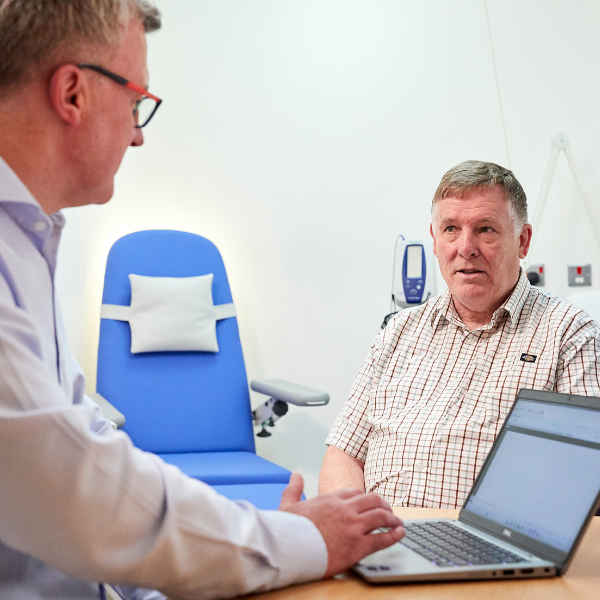
The GM Care Record (GMCR) provides frontline staff with access to vital and up to date information from across GP practices,hospitals and other care providers so they can make better decisions about what care and treatment needs to be provided.
The aim of the GMCR project was to increase clinical use of the GMCR by 20%, to support frontline staff to deliver care and reduce the amount of time spent tracking down important information or repeatedly asking patients.
Key Outputs
- Increased access to information with new data feeds and access for new user groups
- 3 condition specific digital care plans have been developed and deployed in proof of value localities
- Launched the ‘My GM Care’ app with 13,000 logins (300-400 unique daily users) resulting in patients to be able to view and contribute to their own care

Key Outcomes
- Increased information sharing across clinical settings and organisational boundaries – for better decision making at the point of care:
- GMCR is now used by 29K frontline staff every month to support over 493,000 patient episodes every month. We have driven a 20% year on year increase inusage.
- 32% of Community Pharmacies in GM are now live with access to the GM Care Record
- More people in end of life have ‘preferred place of death’ recorded – with over 19K end of life care plans created to date on the GMCR

Key Impacts
- Estimated £59m productivity saving since Apr 22 due to clinical time saved: £20m estimated saving in 25/26. 4:1 ROI
- Better patient outcomes and experiences across pathways and settings


The prevalence of cardiovascular disease in Greater Manchester is disproportionately higher than the rest of the country.
The aim of this project was to optimise the lipids pathway across Greater Manchester, including the targeted deployment of medicines and novel therapies to reduce cholesterol in high-risk groups – delivered through primary care, taking a population health approach.
Key Outputs
- Published codesigned clinical pathways and training materials to aid medicationreviews
- Developed digital tools to support cohort finding and track delivery in real time
- Mobilised a primary care delivery model with a blueprint approach
- Tracked patient outcomes through the GM Care Record, with an inequalities lens
Key outcomes, measured using GM healthcare data assets
- GM exceeded NHSE population-based targets for doses ordered
- 31,604 eligible patients identified using real-world data
- Delivered through a range of workforce models in 183 general practices
- 4,241 high-risk patients accessed novel therapies, representing 13% of the eligible population – with 59% adherence sustained (July 2022– March 2026)
- Overall reduction of LDL by 44%, with 91% of patients seeing a decrease
Key impacts, measured using GM healthcare data assets
- Modelled benefits suggest preventing ~80 heart attacks and strokes over 5 years across GM for active cohort
- Estimated £11.4m to £26.7m in NHS savings over 5 years if eligible cohort fully optimised

Key Outputs
- Completed a detailed report on service mapping of weight management provisionacross GM, from tier 1 to 4
- Developed a health economic analysis on the full costs of obesity to the GM system
- Reimagined how tier 3 provision could optimise new technologies and novelmedicines, modelling capacity and demand costs
- Developed a public attitudes and experiences report of peoples’ lived experience andbarriers to accessing care and support.
Key outcomes, modelled using GM and national healthcare data assets
- Obesity costs the GM system £3.2bn per year in direct health and care costs and widerproductivity losses
- Around 1 in 4 adults in GM live with obesity – (27.1%), and £5297 is the average costper person living with obesity.
- Demand for services is outstripping capacity – 17,313 referrals to T3 (10.1% eligiblepopulation), and only 28% go on to enrol in the service.
- Waiting times for services – 12 months for T3, 18 months for T4
- Stigma and language are real barriers for patients seeking care and treatment.
Key impacts (potential), modelled using GM and national healthcare data assets
- Reducing obesity prevalence could have an economic impact of up to £440m –predominately realised by improving productivity.
- Reimagine tier 3 services optimising digital technology and novel medicines foreligible cohorts – promoting increased equity of access and outcomes

Key Outputs
- Published a GM virtual wards blueprint based on a standard network model acrossproviders to achieve economies of scale
- Codesigned standard clinical pathways, definitions and data sets to encouragecommon standards
- Launched an insight-driven communications campaign to raise awareness of virtualwards across the system and to the public
- Completed a HInM benefits analysis and UoM-led independent evaluation
Key outcomes, modelled using GM and national healthcare data assets
- Over 12 months, GM trusts reported delivering more than 1000 virtual ward beds,running at an average of 74% occupancy – this is a tripling of the bed occupancy.
- Through this same period, GM virtual wards supported 33,000 patients, saving 96,000hospital bed days.
- Whilst the reported costs of a general hospital ward bed are £536 a day, providerreported costs of virtual ward bed days in GM average £133 a day.
Key impacts (estimated)
- Avoided ambulance conveyance – 11,000
- Avoided hospital admissions – 16,000
- A&E attendances avoided – 28,000
- The potential net saving to the system is estimated to be £13.8 million compared totraditional hospital care models (compared to the cost of a hospital stay).
Key Outputs
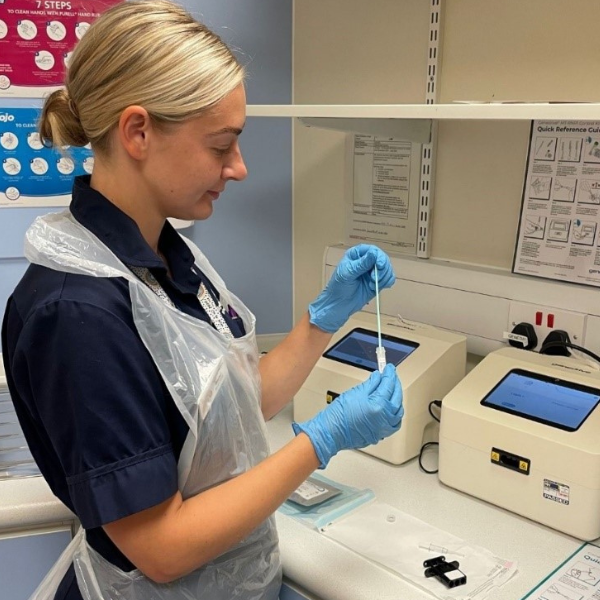
- Adoption of the neonatal point of care genetic test across GM maternity units.
- 1,520 / 3,000 POCTs undertaken for eligible babies by March 2024.
- Additional evidence to NICE Early Value Assessment.
Key outcomes
- Identification of babies susceptible to hearing loss.
- Delivery of alternative treatment (avoided gentamicin).
- Refined implementation model informing wider rollout of POCTs.
Key impacts
- Avoided antibiotic-induced hearing loss in 10-15 babies per year.
- Reduction in associated costs including surgery, healthcare utilization and social careprovision.
- Increased parent / carer satisfaction.
- Increased clinical satisfaction.
