Migraine is more than “just a headache”: listening to the everyday impact on people’s lives
This blog relates to the Transforming Migraine Care in Greater Manchester collaborative working project between Health Innovation Manchester and AbbVie.
As we reflect back on Migraine Awareness Week[1], we’re thinking about the conversations it started: about believing people with migraine, recognising the seriousness of the condition, and understanding the everyday impact it can have on people’s lives.
This year, The Migraine Trust’s[2] campaign focused on a clear message: migraine really is “that bad”. It highlighted how migraine is still too often misunderstood, downplayed or dismissed, despite its ability to affect every aspect of life, from education and career opportunities to family life and everyday experiences.
This message strongly reflects what we have heard through Transforming Migraine Care in Greater Manchester[3], a collaborative working project between HInM and AbbVie. The project has brought together real-world data, health economic modelling, pathway analysis, evidence review and lived experience insights to better understand the impact of migraine across Greater Manchester (GM) and identify opportunities to improve care.
Listening to lived experience
As part of the project, people living with migraine shared their experiences through workshops and one-to-one conversations. Their stories show the reality of the everyday impacts of migraine for some: migraine can be unpredictable, disabling and isolating, with effects that last beyond the attack itself.
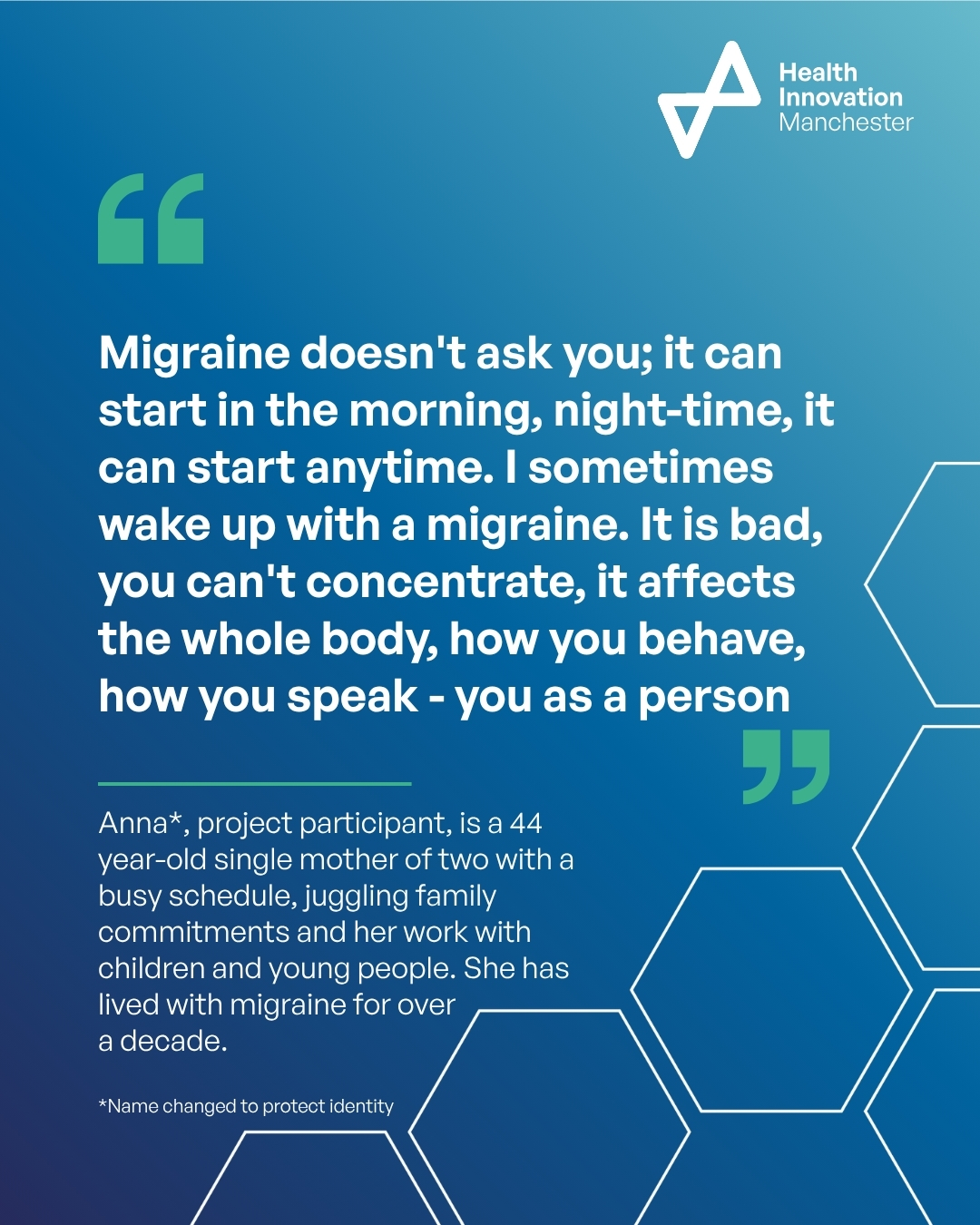
For Anna*, migraine can begin at any time, sometimes even waking her from sleep. She lives with intense pain, dizziness, visual disturbance and difficulty concentrating, while also caring for her children and working in a busy community role with children and young people. During an attack, she cannot simply step away, close the curtains and rest. She continues to work, parent and manage daily responsibilities worrying that taking time off might affect her job security and impact on her finances. As a single parent she often feels guilty about the impact that migraine has on the attention she can give her children.
Nahida has lived with migraine symptoms since her teens. During severe attacks, she can feel as though she cannot feel the floor beneath her feet and she has to reply on family members to help her move safely around the house, get to bed or manage basic tasks.
“When I have an extreme attack, I can’t feel the floor beneath my feet. So I keep thinking, ‘I’m going to lose my balance, I’m going to fall.’ Being that vulnerable, you’re losing yourself. You have no control over your emotions, your abilities.”
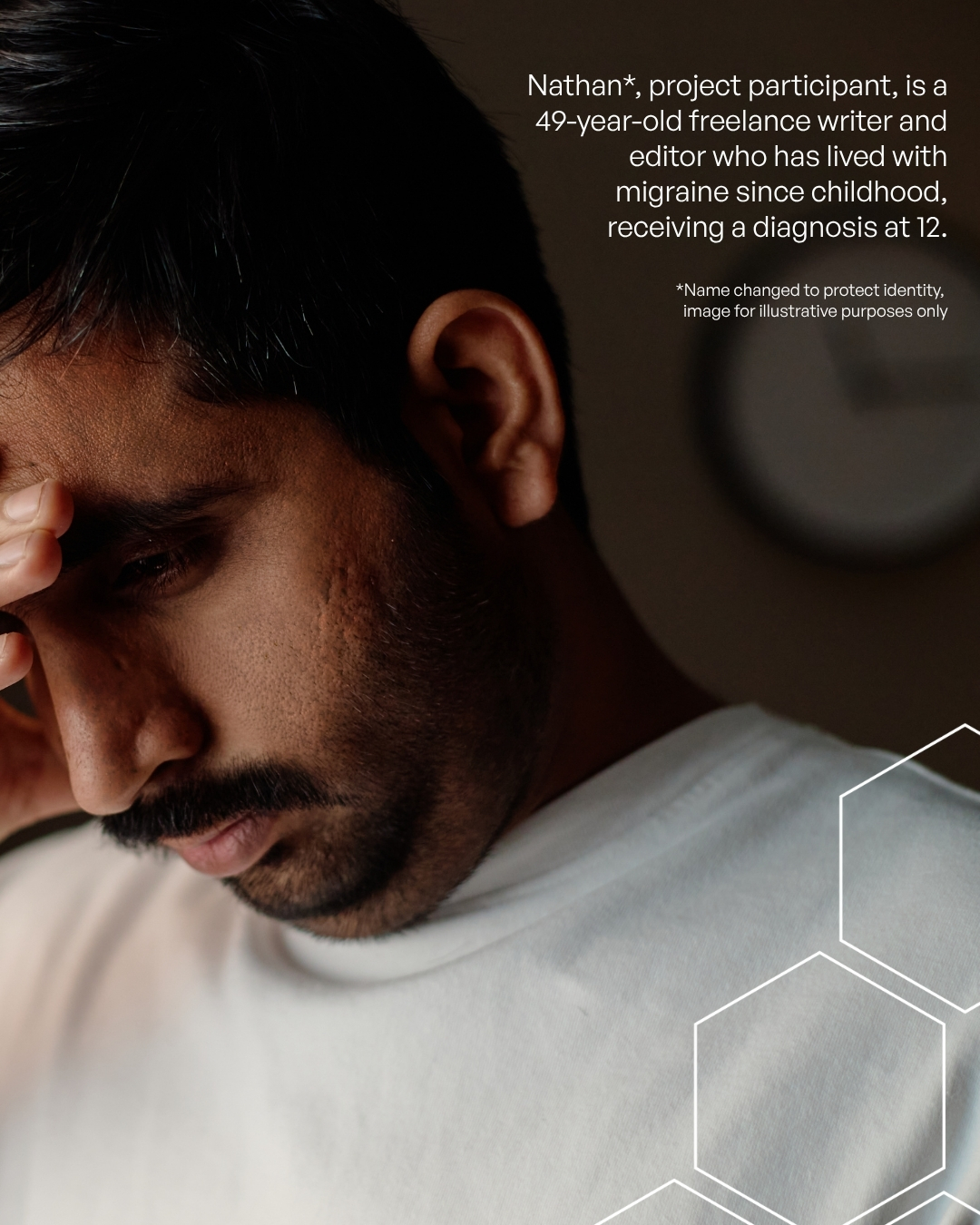
Nathan*, a freelance writer and editor, has lived with migraine since childhood. For him, migraine has to be planned around. He needs to think ahead about medication, hydration, food, lighting and whether an activity or environment could trigger an attack. Migraine affects his ability to work as his projects are laptop-based, commit to deadlines and fully participate in family life and social plans.
“I feel that I can’t get fully involved in life because if I do, I will definitely end up with a migraine.”
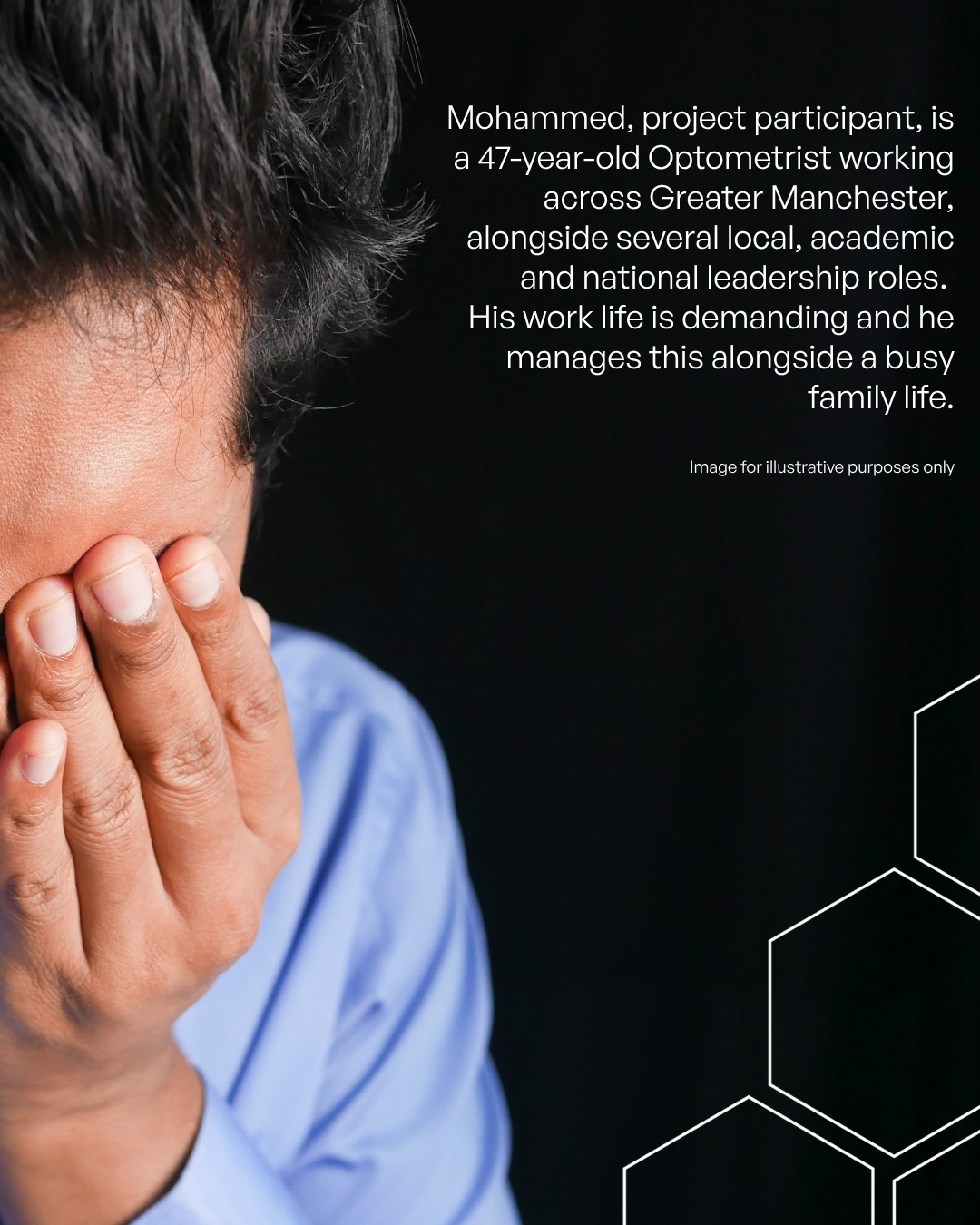
Mohammed brings a different, dual perspective: he is both a clinician working across GM and someone who lives with migraine himself. He described working through migraine attacks, but not being able to function in the same way; thinking more slowly and taking longer to process information. His own experience also shapes how he talks to patients who may feel anxious, dismissed or unsure whether their symptoms will be taken seriously.
“It’s the fogginess you get with migraine, it’s the inability to think.”
What the stories tell us
Together, these stories illustrate that migraine is not a single experience and it is not “just a headache”. It can affect someone’s confidence, concentration, mobility, income, caring responsibilities and ability to take part in everyday life. It can force people to plan around uncertainty, push through symptoms at work, cancel time with family and friends, or rely on others for basic tasks.
They also underline why lived experience is central to improving migraine care. Through the project, people told us they want to be listened to, understood and supported to manage their condition – not only during acute episodes, but as part of daily life. Health and care professionals also highlighted the need for clearer pathways, practical tools and stronger support across primary, community and specialist care.[4]
Transforming migraine care in Greater Manchester
The first phase of the Transforming Migraine Care in Greater Manchester programme has found that migraine is a significant but often hidden population health challenge. Around 280,000 people in Greater Manchester are estimated to experience migraine. The annual burden is estimated at approximately £870 million, with much of the impact arising from reduced quality of life and lost productivity, not healthcare costs alone.[5]
The findings point to opportunities to improve outcomes through earlier diagnosis, treatment optimisation, strengthened primary and community care, improved integration and more consistent implementation of existing evidence-based practice.[6] Most importantly, they show the need for care that recognises the full burden of migraine and the realities of people’s lives.
Believe the impact
Migraine Awareness Week[7] has been a timely reminder to believe people with migraine, because understanding starts with listening. By bringing together data, evidence, clinical insight and lived experience, HInM is working with partners to better understand how migraine affects people across GM and how care can be improved.
For people like Anna, Nahida, Nathan and Mohammed, migraine is not an occasional inconvenience. It can shape whether they can work, care for family, see friends or simply get through the day. Reflecting back on Migraine Awareness Week, their stories show why migraine must continue to be taken seriously long after the campaign has ended, and why patients’ voices are vital in transforming care.
*Names changed to protect identity
UK-ABBV-260373 | October 2026
References
[1] The Migraine Trust, Migraine Awareness Week 2026: https://migrainetrust.org/get-involved/campaign-with-us/migraine-awareness-week/
[2] The Migraine Trust: https://migrainetrust.org/
[3] Transforming Migraine Care in Greater Manchester: https://healthinnovationmanchester.com/news-archive/new-report-estimates-870-million-annual-burden-of-migraine-in-greater-manchester/
[4] Transforming Migraine Care in Greater Manchester: https://healthinnovationmanchester.com/news-archive/new-report-estimates-870-million-annual-burden-of-migraine-in-greater-manchester/
[5] Transforming Migraine Care in Greater Manchester: https://healthinnovationmanchester.com/news-archive/new-report-estimates-870-million-annual-burden-of-migraine-in-greater-manchester/
[6] Transforming Migraine Care in Greater Manchester: https://healthinnovationmanchester.com/news-archive/new-report-estimates-870-million-annual-burden-of-migraine-in-greater-manchester/
[7] The Migraine Trust, Migraine Awareness Week 2026: https://migrainetrust.org/get-involved/campaign-with-us/migraine-awareness-week/


