Improving outcomes through innovation and collaboration: Professor Javed Sultan’s journey in cancer care
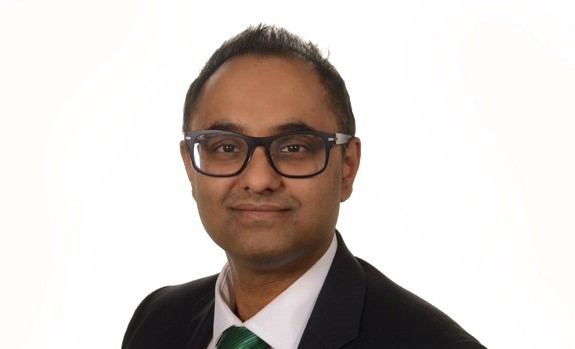
The MAHSC (Manchester Academic Health Science Centre) inaugural lecture series celebrates the remarkable contributions of our honorary MAHSC clinical chairs. These prestigious honours, awarded by the University of Manchester’s Faculty of Biology, Medicine and Health, recognise distinguished individuals across Greater Manchester who have demonstrated excellence in research, education and clinical practice.
Through this lecture series, MAHSC provides a platform to showcase not only the achievements of these clinical leaders but also the wider impact of their work on patients, services and population health. Each lecture offers insight into the personal and professional journeys that have shaped careers dedicated to improving care through innovation, collaboration and discovery.
In this lecture, Professor Javed Sultan (Consultant Oesophago-Gastric Surgeon at Northern Care Alliance NHS FT) reflected on his journey as a surgeon, researcher and clinical leader, sharing how a commitment to continuous improvement has driven his work to transform cancer pathways, advance prehabilitation research and improve outcomes for patients undergoing major surgery.
Professor Sultan began by reflecting on a career that has taken him across the country before ultimately bringing him back to Greater Manchester.
Born in Manchester and educated at a Bolton School, he completed his medical training in Newcastle, where he spent 16 years progressing from medical student to consultant surgeon. During this time, he worked in one of the UK’s leading oesophago-gastric cancer centres, developing expertise in caring for patients with some of the most complex and challenging conditions in surgery. Following a consultant role in Guildford, he returned to Salford in 2018, with a desire to be closer to family.
Reflecting on this journey, he highlighted the influence of mentors, colleagues and opportunities encountered along the way, emphasising that careers are often shaped as much by people and relationships as they are by individual ambition.
Improving outcomes through marginal gains
A recurring theme throughout the lecture was Professor Sultan’s belief in the power of marginal gains.
While surgery remains a critical component of treatment for oesophageal and gastric cancers, he argued that successful outcomes depend on much more than what happens in the operating theatre. From diagnosis and decision-making to prehabilitation and recovery, every stage of the patient pathway offers opportunities to improve outcomes.
Patients with oesophago-gastric cancer often face lengthy and complex treatment journeys, involving multiple investigations, assessments and interventions. Delays can have serious consequences, contributing to declining fitness, disease progression and reduced treatment options. Professor Sultan described how these challenges inspired his focus on redesigning pathways to ensure patients receive the right care at the right time.
Transforming cancer pathways
One of the most striking examples of service innovation discussed during the lecture was the development of a one-stop multidisciplinary clinic for patients with complex oesophago-gastric cancer.
Recognising the fragmented nature of traditional pathways, Professor Sultan worked with colleagues across disciplines to create a model that brings multiple assessments and specialist reviews together within a single coordinated service. Patients undergo fitness assessments, dietetic reviews, prehabilitation screening and multidisciplinary discussion in a streamlined process, allowing treatment decisions to be made more rapidly and reducing unnecessary delays.
The initiative required significant collaboration across clinical teams, managers and partner organisations, demonstrating how innovation in healthcare often depends on bringing people together around a shared goal. For Professor Sultan, improving pathway efficiency is not simply about meeting targets; it is about ensuring patients receive timely treatment with excellent experience and the best possible chance of a successful outcome.
Preparing patients for surgery
Another major focus of the lecture was prehabilitation – the process of helping patients improve their physical and psychological readiness before undergoing treatment.
Professor Sultan described how growing evidence suggests that improving fitness, nutrition and resilience before surgery can have a meaningful impact on recovery and long-term outcomes. In cancers where patients often undergo intensive treatment before surgery, maintaining physical condition becomes increasingly important.
His work has contributed to the growing understanding of how structured exercise programmes and multidisciplinary support can help patients better tolerate treatment and recover more effectively. By shifting attention towards what happens before an operation, clinicians have the opportunity to improve outcomes beyond the technical aspects of surgery itself.
Building an evidence base through research
Research has been central to Professor Sultan’s career and continues to shape his vision for the future of cancer care.
He highlighted a number of ongoing studies exploring how prehabilitation influences patient outcomes, including collaborative research examining exercise interventions, muscle loss and treatment-related deconditioning. Working with partners across Greater Manchester and beyond, these studies aim to generate the evidence needed to guide future clinical practice and ensure patients receive the most effective support possible.
Particularly exciting are investigations into novel approaches to exercise and conditioning, including research exploring the potential role of altitude training and advanced physiological monitoring. These projects demonstrate how academic partnerships can help tackle longstanding clinical challenges through innovative thinking and cutting-edge science.
The importance of collaboration
Throughout the lecture, Professor Sultan repeatedly returned to the importance of collaboration.
Whether redesigning pathways, delivering complex cancer care or conducting research, progress depends on bringing together expertise from across disciplines and organisations. Surgeons, oncologists, anaesthetists, nurses, allied health professionals, dieticians, intensivists, researchers and managers all play a role in creating better outcomes for patients.
He reflected on the value of these partnerships in driving innovation, highlighting how collaboration enables healthcare systems to address challenges that no single individual or organisation can solve alone.
Looking ahead
Looking to the future, Professor Sultan expressed optimism about the opportunities emerging across cancer care.
Advances in personalised medicine, immunotherapy, prehabilitation and service transformation all offer significant potential to improve survival, recovery and quality of life. However, realising these benefits will require continued investment in research, workforce development and system-wide collaboration.
For Professor Sultan, the ultimate goal remains unchanged: improving outcomes for patients through evidence-based innovation and continuous improvement.
A career dedicated to improving patient outcomes
Professor Javed Sultan’s inaugural lecture offered a thoughtful reflection on a career shaped by curiosity, collaboration and a determination to improve care.
From redesigning cancer pathways and advancing prehabilitation research to supporting national service improvement, his work demonstrates how innovation can transform the experiences and outcomes of patients facing serious illness. His lecture served as a powerful reminder that meaningful progress often comes from a commitment to continuous improvement, with clinicians, researchers and healthcare organisations working together to achieve better outcomes for the people and communities they serve.


